John Rylands Collections Online: Exploring Manchester History From Home
Start with two digitised Manchester maps, choose the right library search route and understand the difference between viewing a record and reusing its images.
Published
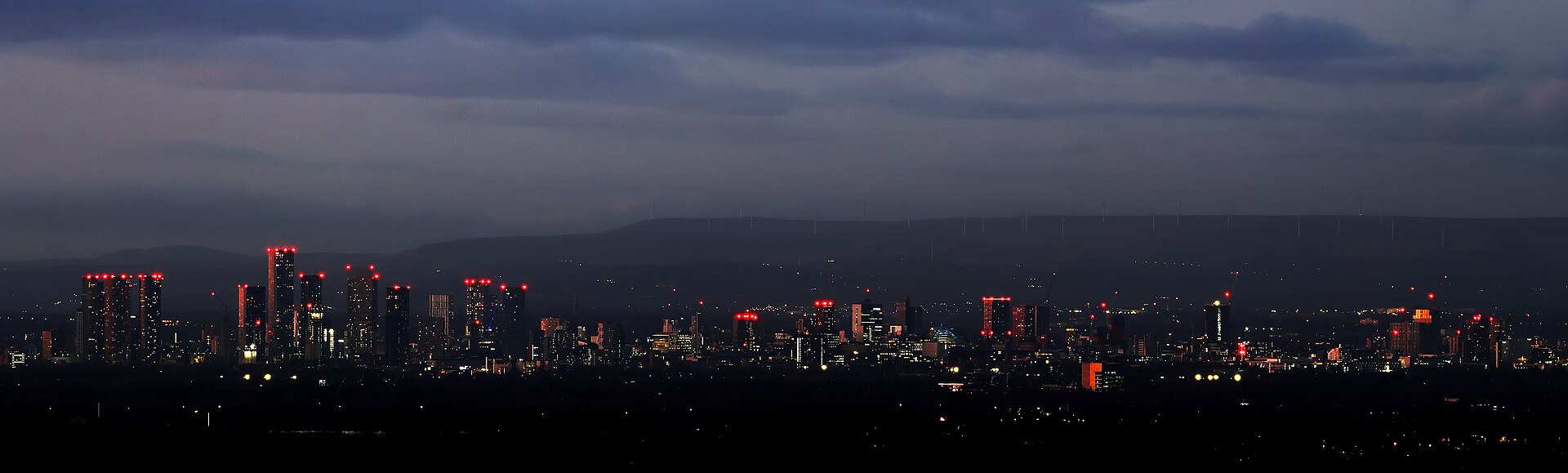

You can begin exploring John Rylands Library collections online through the University of Manchester Library’s digital repositories and catalogues. For Manchester history, two useful starting points are a Geographia city plan and a plan of St Peter’s Field in the Peterloo collection. They offer specific places to begin, while the library’s search guidance helps you distinguish digitised material from descriptions of physical collections.[1][3][4]
Choose a Search Route That Matches Your Question
The library’s Search Special Collections page brings several routes together. Choose according to what you want to find: an overview of a collection, an object to examine online or an archive description to follow up. These routes serve different purposes, so a result in one system doesn’t establish that images or full text are available.[1]
| Your Starting Point | Library Route | What It Provides |
|---|---|---|
| You’re unsure which collection covers your subject | Special Collections A–Z | An overview and collection descriptions |
| You want digitised material | Manchester Digital Collections and Library Digitised Collections | The library’s digital repositories |
| You’re tracing archives or English manuscripts | ELGAR | The Electronic Gateway to Archives at the Rylands |
| You want an introduction with interpretation | Manchester Digital Exhibitions | Online exhibitions and curated research |
For a first evening of browsing, we’d start with a named digital collection. If you already have a particular archive or manuscript in mind, ELGAR is the more focused route. Keep the collection description alongside any individual record you find, because it supplies context that an isolated title may leave out.[1]
Mapping Manchester Extends Beyond the City
Mapping Manchester is a collection within Manchester Digital Collections. Its stated focus covers Manchester and surrounding areas, including Lancashire. That matters when choosing material for a neighbourhood project: check the location described by each record before treating it as evidence about the city itself.[2]
The collection introduction connects its maps with industrial expansion, canals, rivers, railways, mills and factories. Use those themes to form a question before browsing. You might look for material relevant to transport or a particular district, then check what each item actually covers. The page also describes the university’s wider physical map holdings, which should be kept separate from the selection digitised here.[2]
Two Records to Open First
The record titled “Geographia” plan of Manchester describes a large-scale coloured plan, with an inset of Manchester’s environs and another showing Withington in detail. That description gives you a useful reason to open the item if your interest includes Withington. It also establishes that the main plan and its insets cover different areas.[3]
For a more concentrated location, try Plan of St Peters Field with the Avenues leading thereto in the Peterloo collection. Its description identifies St Peter’s Field and the surrounding streets at the time of the Peterloo Massacre. Start by recording that stated subject, rather than assuming the plan’s title establishes when it was made.[4]
Compare the records before drawing historical conclusions. The Geographia description points towards a city plan with additional geographical detail. The Peterloo description centres on a particular site and its surrounding streets. They answer different questions, so neither should stand in for a complete account of Manchester at a single moment.[3][4]
When making notes, separate the exact title, any stated date, any classmark and the description. Preserve qualifications attached to a date, and distinguish the period depicted from the date of production. Add your own observations separately. This makes it easier to return to the record without confusing a catalogue description with something you’ve inferred.[1][3][4]
Recognise When Online Discovery Reaches Its Limit
A collection description can help you identify relevant material even when it doesn’t provide the object online. The library lists archive records, manuscript catalogue PDFs and digital repositories separately. If your question depends on an original document beyond the digitised selection, keep its catalogue reference for a library enquiry. Finding that reference is a useful outcome, but it leaves the question of consulting the original unresolved.[1]
Check Access and Image Rights Separately
Manchester Digital Collections and Library Digitised Collections are distinct services. The library’s support page identifies LUNA as the software used for Library Digitised Collections and warns that some collections require a University username and password when accessed off campus. University staff and students also have additional features requiring login. Don’t assume every search result will offer the same access.[5]
Image reuse needs its own check. The support page states that University of Manchester images made available through Manchester Digital Collections use a Creative Commons Attribution-NonCommercial-ShareAlike licence. It requires appropriate credit and directs commercial licensing enquiries to the library’s imaging team. Being able to view an image doesn’t establish permission to publish it commercially.[5]
Check the individual image’s Rights Holder and Notes fields too. Some collections have further copyright restrictions or material from other institutions. For a proposed use outside the stated licence, the library gives uml.chicc@manchester.ac.uk as its contact. While exploring, save the individual record link with your notes so you can return to its description and rights information before sharing an image.[3][4][5]
Sources and checks
These sources were used for this article. Availability, prices and service details can change after the stated check date.
- Search Special Collections (The University of Manchester Library)
Checked 20 October 2026.
The library provides separate routes for collection descriptions, digital repositories, archive records and manuscript catalogue PDFs. ELGAR covers archive collections and English manuscripts. Manchester Digital Exhibitions provides online exhibitions and curated research. A catalogue discovery should be distinguished from access to a digitised object.
- Mapping Manchester
Checked 20 October 2026.
Mapping Manchester covers Manchester and surrounding areas, including Lancashire. The collection introduction identifies industrial development and transport networks as subjects represented by the maps. Readers should check individual geographical coverage rather than treating every item as evidence about Manchester city.
- Mapping Manchester : "Geographia" plan of Manchester
Checked 20 October 2026.
The Geographia plan record describes a large-scale coloured plan. The description identifies insets of Manchester’s environs and Withington. The item provides a concrete starting point for investigating Manchester and Withington without asserting unobserved visual findings.
- Peterloo collection : Plan of St Peters Field with the Avenues leading thereto
Checked 20 October 2026.
The Peterloo item describes St Peter’s Field and surrounding streets at the time of the massacre. Its stated geographical and historical focus differs from the Geographia city plan. The description of the period depicted should not be treated as a production date.
- Digital collections support (The University of Manchester Library)
Checked 20 October 2026.
Library Digitised Collections uses LUNA software. Some off-campus collection access and additional University features require login. Some collections contain images from other institutions. The support page specifies a Creative Commons Attribution-NonCommercial-ShareAlike licence for University images made available in Manchester Digital Collections. Appropriate attribution is required under the stated licence. Commercial licensing and uses outside the licence should be referred to the imaging team. Readers should check image-level Rights Holder and Notes fields for restrictions.