Manchester Families in Numbers: Planning Useful Free Community Resources
Manchester’s 2021 household and child-age figures offer context for family activities, alongside practical questions to ask when planning a flexible day.
Published
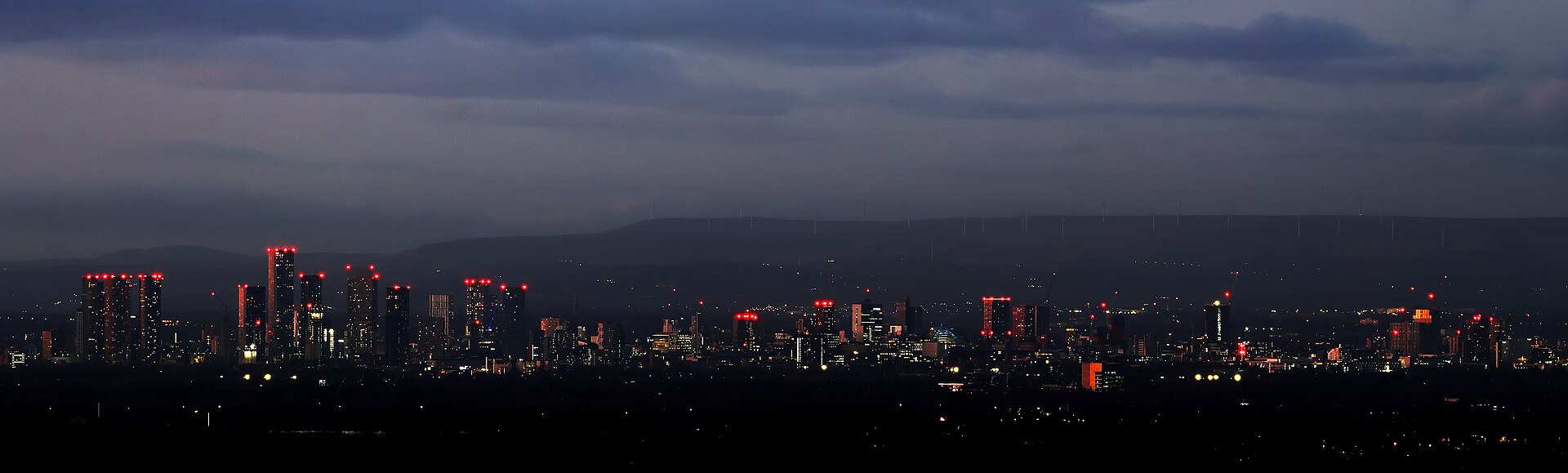

Planning a free family day means finding something that suits the children coming along. Manchester’s Census 2021 figures give that task some useful context. Our analysis of the official age table counts 107,283 usual residents aged 0 to 14 in Manchester metropolitan district on 21 March 2021, representing 19.44% of its 551,937 usual residents.[2][5]
That historical picture helps explain why family information deserves more detail than a broad age label. It cannot establish what an individual household needs, what it can afford or which activity its children will enjoy. Household composition adds another perspective, provided we keep people and households separate.[1][2][4]
Which Manchester Do These Figures Describe?
Every calculation here covers Manchester metropolitan district, geography code E08000003. The Office for National Statistics, the UK’s official statistics body, identifies this district as being within Greater Manchester. Its listed electoral wards include Harpurhey, Chorlton and Woodhouse Park. The figures cover the city authority, rather than the whole Greater Manchester area or just the city centre.[3][4]
For your own outing, start with the address you’ll travel from. A citywide population total gives no answer about the journey that works for your family. Equally, these district totals cannot tell us how children are distributed between those wards.[3][5]
Three Age Bands Make the Family Label More Useful
Manchester’s three youngest Census age bands each contained more than 34,000 residents in 2021. The table pairs those recorded counts with our suggested planning questions. The questions are prompts for choosing an activity, rather than conclusions about children drawn from their age.[2][5]
| Age on 21 March 2021 | Manchester usual residents | Our Suggested Planning Question |
|---|---|---|
| 4 years and under | 34,378 | Can we keep the visit short and leave when we need to? |
| 5 to 9 years | 36,561 | What will the child actually do, and what adult participation is expected? |
| 10 to 14 years | 36,344 | Does the activity description give an older child enough detail to choose? |
Keep the age boundaries in view. The combined 107,283 figure describes residents aged under 15. The next published band runs from 15 to 19, crossing the eighteenth birthday, so this table cannot supply an exact under-18 total.[2][5]
Nor does the table identify siblings. If you’re taking children of different ages, our recommendation is to check the activity’s age range for each child before building the day around it.[2][5]
Household Composition Adds a Different Perspective
Our analysis of Census 2021 household composition finds 64,686 Manchester households across four categories explicitly labelled as having dependent children. Together, those categories represented 30.12% of the district’s 214,734 households on 21 March 2021.[1][4]
The four categories cover married or civil partnership couples, cohabiting couples, lone-parent families and other household types with dependent children. This is a count of households in those classifications. It does not count their children or establish how many adults would accompany them on an outing.[1][4]
For community activity listings, we recommend stating the accompaniment rules directly: who must stay, whether siblings may attend and whether each participant needs a booking. A household category cannot answer those practical questions or establish anyone’s eligibility for a particular offer.[1][4]
How We Calculated the Figures
Our analysis uses Census 2021 household composition dataset TS003, with its version 4 definitions, and age dataset TS007A. The data snapshot was retrieved on 20 October 2026. Both datasets describe 21 March 2021. We selected Manchester code E08000003, the 2021 observation and measure 20100, labelled Value, from the returned district records.[1][2][4][5]
For households, we added composition categories 5, 8, 10 and 13: 28,116 + 8,075 + 20,225 + 8,270 = 64,686. Dividing by the same table’s all-household total of 214,734 and multiplying by 100 gives 30.12%, rounded to two decimal places. We retain the description of those four categories rather than relabelling the result as every possible family with children.[4]
For ages, categories 1, 2 and 3 give 34,378 + 36,561 + 36,344 = 107,283. Dividing by TS007A’s total of 551,937 gives 19.44%. The published total is the denominator, not another category to add. Census confidentiality measures can cause small differences between tables. Household composition also carries official cautions about comparisons with 2011, so we make no claim about growth.[1][2][5]
Build Flexibility Around the Children Coming With You
Our practical recommendation is to choose one main activity and treat any second stop as optional. Use the age questions above to discuss the choice with your children, then check the organiser’s own information for the arrangements that matter to your group. The Census describes a population, so it leaves the decision about your particular day open.[2][4][5]
- Check the stated age range for every child attending.
- Confirm whether adults must remain and whether siblings can join.
- Check booking requirements and what free admission actually includes.
- Allow for your own travel and food costs when setting a budget.
- Choose a point when you can shorten the outing without losing the main activity.
Before setting out in Manchester, settle the question the numbers cannot: what would make this a worthwhile day for the children you’re taking? Let their answer shape the plan, including when to head home.[2][5]
Sources and checks
These sources were used for this article. Availability, prices and service details can change after the stated check date.
- Household composition
- Office for National Statistics
Checked 20 October 2026.
TS003 classifies households by relationships between household members. The household observations describe 21 March 2021. Official quality cautions apply to household and family composition and comparisons involving the definition of other household types since 2011. Household composition supplies demographic context rather than personal eligibility criteria.
- TS007A - Age by five-year age bands - Nomis - Official Census and Labour Market Statistics
Checked 20 October 2026.
TS007A measures usual residents in five-year age bands on 21 March 2021. Age-band counts describe people rather than households or sibling groups. Statistical disclosure control can introduce small differences between Census tables.
- Manchester (E08000003) - ONS
Checked 20 October 2026.
Manchester is a metropolitan district within Greater Manchester. Harpurhey, Chorlton and Woodhouse Park are among the district’s listed electoral wards. The article’s district geography is distinct from the wider Greater Manchester area.
- TS003
Checked 20 October 2026.
Manchester code E08000003 has an all-household denominator of 214,734 in the retained 2021 district table. The verified calculation uses mutually exclusive composition categories 5, 8, 10 and 13, with counts 28,116, 8,075, 20,225 and 8,270. Our analysis sums those four explicitly dependent-child categories to 64,686 households. Our analysis divides 64,686 by 214,734 and multiplies by 100 to obtain 30.12%, rounded to two decimal places. The derived result describes the four specified categories rather than every possible family with children. The retained snapshot was retrieved on 20 October 2026 and uses measure 20100, labelled Value.
- TS007A
Checked 20 October 2026.
The retained 2021 Manchester age table records 551,937 usual residents. It records 34,378 residents aged 4 and under, 36,561 aged 5 to 9 and 36,344 aged 10 to 14. Our analysis sums those three mutually exclusive bands to 107,283 residents aged 0 to 14. Our analysis divides 107,283 by 551,937 and multiplies by 100 to obtain 19.44%, rounded to two decimal places. The next retained age category is 15 to 19, so the five-year bands cannot isolate an exact under-18 population. The retained snapshot was retrieved on 20 October 2026 and uses Manchester code E08000003 and measure 20100.